The Great Debate: Flats vs. Villas in Delhi, Which One Actually Makes Money in 2026?

The Great Debate Flats vs Villas in Delhi Which One Actually Makes Money in 2026
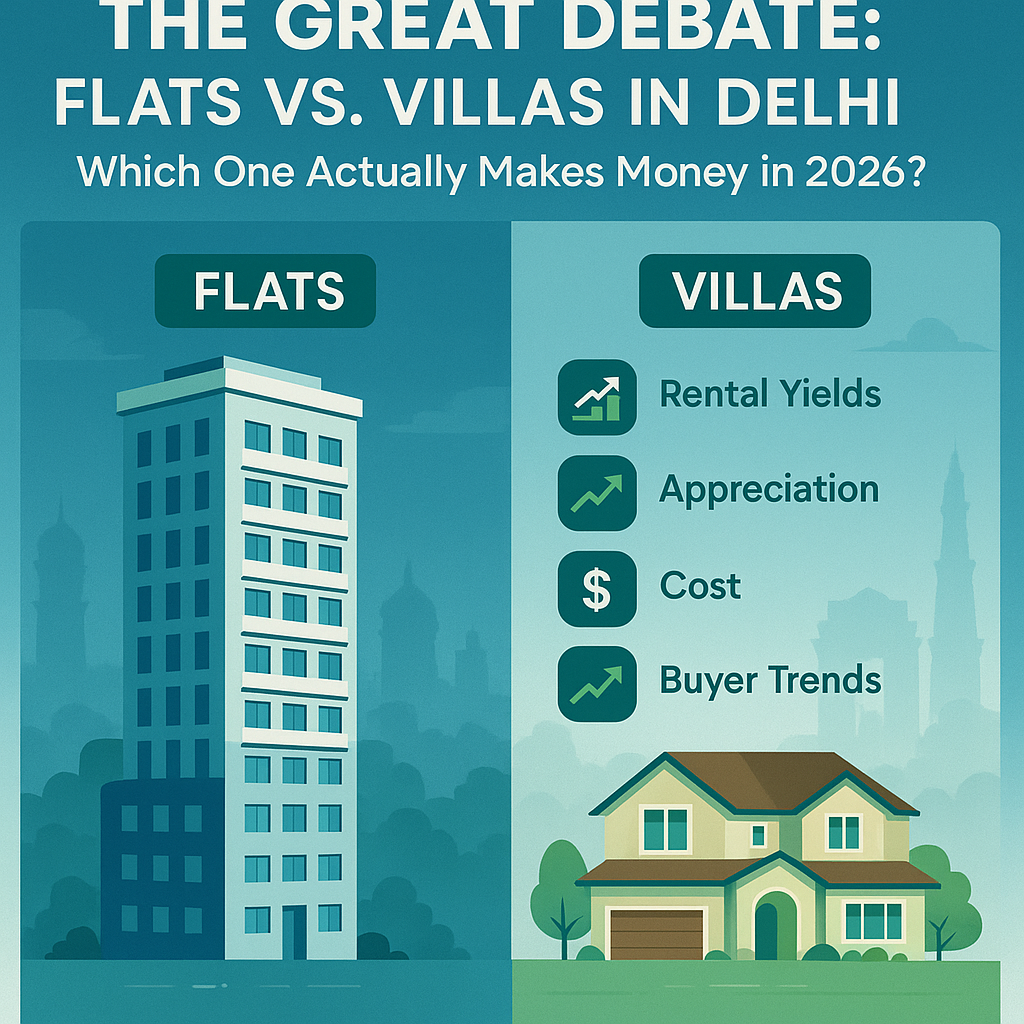
Delhi’s real estate market has always sparked strong opinions. Some buyers swear by apartments for their affordability and rental demand, while others believe villas represent the ultimate long term investment. As 2026 approaches, this debate has become more relevant than ever. Buyers and investors want to know which option actually delivers better returns in a changing market shaped by infrastructure growth, shifting lifestyles and evolving tenant preferences.
Delhi Properties now span a wide spectrum, from compact flats in gated communities to premium independent villas in emerging corridors. Property prices in Delhi continue to vary sharply based on location, configuration and buyer profile. To make an informed choice, it is important to understand how flats and villas perform across rental income, capital appreciation, maintenance costs and resale demand.
Many buyers start by understanding how India’s housing market is evolving at a national level. Resources like the Home Buyers Guide offer helpful context on why buyer priorities are shifting toward both value and long term sustainability. This background helps place the Delhi flats versus villas debate in perspective.
Understanding the Two Asset Types in Delhi
Flats in Delhi typically include apartments in gated communities, high rise towers and mid rise residential projects. These homes appeal to a wide audience because they offer security, shared amenities and predictable costs. Apartments in Delhi range from budget units in developing zones to luxury residences in premium neighbourhoods.
Villas in Delhi refer to independent or semi independent homes, often located in low density developments or exclusive gated enclaves. These properties offer more space, privacy and land ownership. Villas are usually priced higher and attract buyers with larger budgets and longer investment horizons.
The key difference lies not just in lifestyle but in how each asset performs financially. Understanding this difference is essential for anyone looking to make money from property rather than just owning a home.
Rental Income Flats Clearly Lead the Race
When it comes to rental income, flats in Delhi hold a clear advantage. The demand for a flat for rent in Delhi remains strong across most parts of the city. Working professionals, students, young families and migrants prefer apartments because they are affordable, secure and closer to employment hubs.
Apartments in gated societies offer features such as lifts, power backup, parking and security. These amenities make them easier to rent out and justify steady monthly rents. Even during slower market cycles, flats tend to find tenants faster than villas.
Villas, on the other hand, attract a much smaller tenant pool. Their higher rent levels limit demand to senior executives, diplomats or large families. Vacancy periods for villas can be longer, which affects annual rental returns.
For investors focused on consistent cash flow, flats usually generate better rental yields. This is one of the main reasons why apartments continue to dominate investor interest in Delhi.
Capital Appreciation Where Villas Begin to Shine
While flats perform well on rentals, villas often outperform when it comes to long term capital appreciation. Land ownership plays a key role here. Villas include a land component, which tends to appreciate faster than constructed space over time.
In parts of Delhi where new land supply is limited, villas benefit from scarcity. Premium villa developments and independent homes in well connected areas often see strong price growth over longer holding periods. Buyers who invest early in emerging villa corridors may see substantial appreciation by 2026 and beyond.
However, this appreciation is not uniform. Villas in poorly connected or oversupplied areas may struggle to see meaningful growth. Investors often study curated resources like the Top Villa Projects Guide to identify locations with genuine appreciation potential.
Flats also appreciate, but their value growth is influenced more by building age, maintenance quality and market supply. Over time, older apartment buildings may face price stagnation compared to newer projects.
Entry Cost and Accessibility Matter
One of the biggest reasons flats dominate the Delhi market is affordability. Entry costs for apartments are significantly lower than for villas. This allows a larger group of buyers and investors to participate in the market.
Budget friendly apartments and mid segment flats offer flexible pricing and easier financing options. Many buyers prefer starting with a flat because it requires less capital and lower loan exposure. This makes apartments in Delhi more accessible for first time investors.
Villas require a much higher upfront investment. This limits their appeal to high net worth individuals and long term investors. While the potential upside can be attractive, the higher entry barrier increases risk if market conditions change.
Buyers who want to understand how budget homes fit into the broader market often explore resources such as Affordable Apartments in Delhi to evaluate safer entry points.
Maintenance and Ownership Costs
Ownership costs play a major role in determining net returns. Flats benefit from shared maintenance expenses. Security, landscaping, common area upkeep and utilities are managed collectively, which keeps individual costs predictable.
Apartment owners usually pay monthly maintenance charges, but these are easier to budget for. This stability helps investors calculate long term returns more accurately.
Villas involve higher maintenance responsibilities. Owners bear the cost of structural repairs, landscaping, security systems and utilities independently. Over time, these costs can add up and reduce net profitability.
For investors who want minimal involvement and predictable expenses, flats often prove more efficient from a cost management perspective.
Liquidity and Resale Demand
Liquidity refers to how easily an asset can be sold. Flats in Delhi are far more liquid than villas. The buyer pool for apartments is large, which makes resale faster and less uncertain.
Flats in well located societies, especially those close to metro lines and business hubs, attract steady buyer interest. This helps sellers exit investments when needed.
Villas have a narrower buyer base. Finding the right buyer can take time, especially during slower market phases. While the ticket size is higher, liquidity risk is also greater.
Investors who value flexibility often prefer flats because they can exit or reinvest more easily.
Location Plays a Bigger Role Than Asset Type
Whether flats or villas make more money often depends on location rather than configuration alone. A well located apartment can outperform a poorly located villa, and the reverse is also true.
Flats near employment hubs, metro corridors and social infrastructure tend to deliver strong rental demand and steady appreciation. Similarly, villas in premium or fast developing corridors can outperform average apartment projects.
Buyers who want to track location based growth often consult guides such as Top Under Construction Properties in Delhi to identify emerging opportunities across the city.
Luxury Buyers Think Differently
Luxury buyers often approach the flats versus villas debate from a different perspective. For them, lifestyle and exclusivity matter as much as returns. Luxury apartments and villas both serve this segment, but in different ways.
High end apartments offer concierge services, premium amenities and central locations. Luxury villas offer privacy, space and independence. Financial returns may not be the primary driver for this group.
Those exploring this segment often refer to the Luxury Properties Guide to understand how premium assets perform relative to the broader market.
Developer Quality Influences Returns
Whether buying a flat or a villa, developer credibility plays a major role in investment success. Well known builders deliver better construction quality, timely possession and stronger resale value.
Projects by trusted names tend to attract more buyers and tenants, which supports both rental income and appreciation. Investors often review the Top Builders in Delhi before committing to any project.
Poorly executed projects, regardless of asset type, can struggle to generate returns.
Financing and Leverage Considerations
Flats are easier to finance. Banks and lenders are more comfortable funding apartments, especially in approved projects. This allows buyers to use leverage more effectively and improve returns on invested capital.
Villas may face stricter lending criteria, especially if they are independent properties or located in less developed areas. Higher interest costs and lower loan eligibility can impact overall profitability.
Buyers planning to use loans should understand repayment structures and interest impacts. The Home Loan Guide helps buyers plan financing wisely.
Which One Makes More Sense in 2026
For most investors in 2026, flats in Delhi continue to make more practical financial sense. They offer stronger rental demand, better liquidity, lower entry costs and easier management. Apartments suit buyers who want steady income and flexibility.
Villas make sense for long term investors with higher risk tolerance and larger capital. They work best when chosen carefully in locations with strong future growth and limited land supply.
The decision ultimately depends on financial goals. Those seeking regular income and easier exits may find flats more rewarding. Those focused on long term wealth creation and lifestyle value may prefer villas.
Where to Explore Opportunities
Buyers looking to compare different options can explore active listings across the city at Delhi. A wider selection of properties across cities is available on GharPe.
Reviewing multiple projects, locations and configurations helps buyers align choices with financial objectives.
Conclusion
The flats versus villas debate in Delhi does not have a single answer. In 2026, flats generally offer better rental income, liquidity and accessibility, making them the preferred choice for most investors. Villas offer strong long term appreciation potential but come with higher costs and risks.
Smart investors focus on location quality, developer reputation and long term demand rather than configuration alone. With careful planning and informed decisions, both flats and villas can make money, but the path and timeline differ significantly.
Is investing in under construction property in Delhi worth the risk in 2026? Explore rewards, risks, pricing trends...
New or old Delhi properties? Explore renovation costs, price trends, resale value and investment potential to decide...
Flats or villas in Delhi? Explore rental yields, appreciation, costs and buyer trends to understand which property...
Discover Delhi apartments that generate rental income strong enough to cover EMIs in 2026. Learn which homes,...
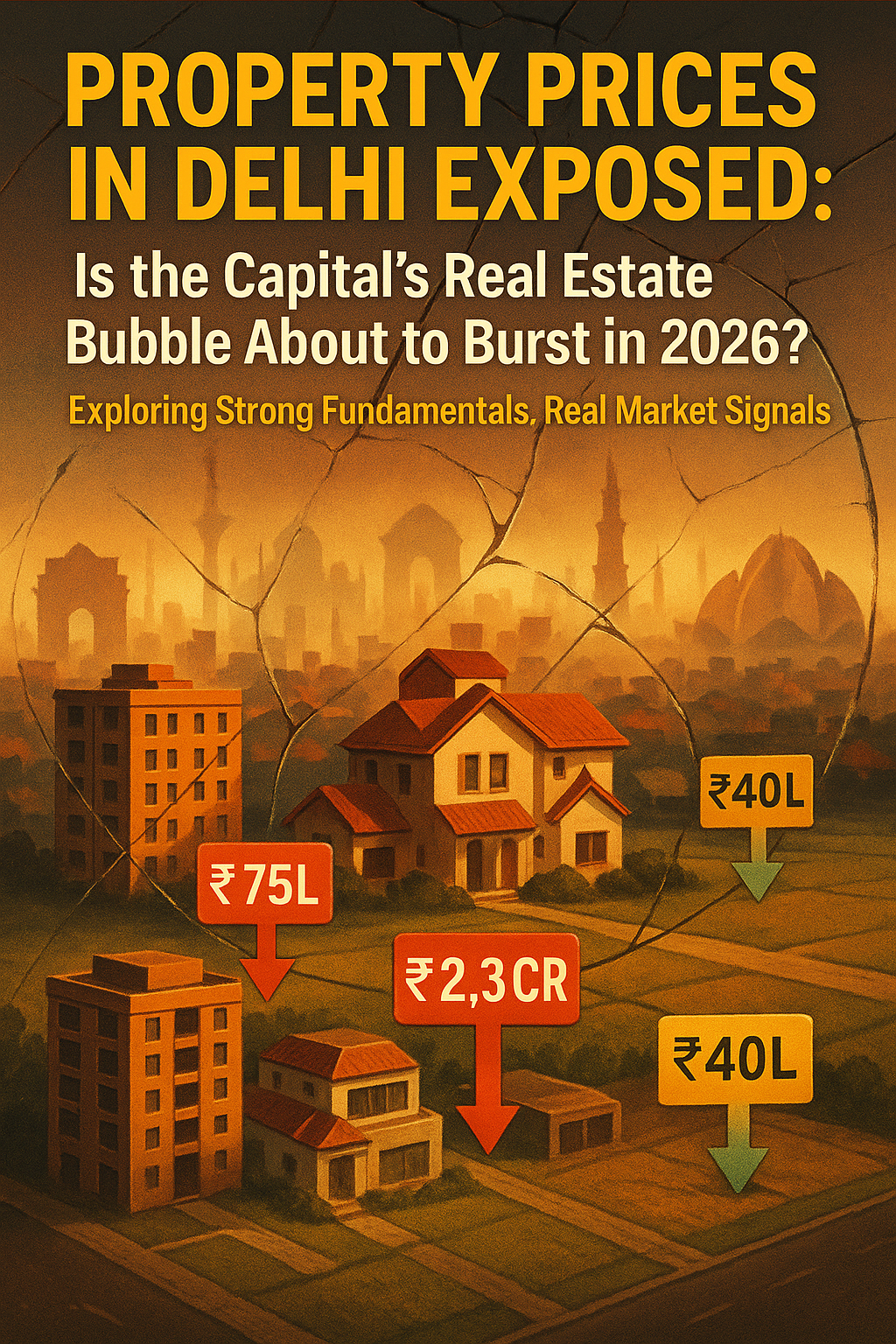
Are Delhi property prices overheated in 2026 or still backed by strong fundamentals Explore apartments, villas,...

Resale flats in Delhi are quietly outperforming new launches. Discover why smart buyers are choosing ready homes for...

Affordable 1 BHK flats in Delhi are disappearing fast. Discover where buyers are still finding value in 2026 and how...

Explore Delhi’s most exclusive 3 BHK premium flats in 2026. Discover luxury layouts, elite locations, lifestyle...

Discover the 2 BHK apartment layout in Delhi that buyers prefer most in 2026 and why it delivers stronger resale...
Explore the best under construction properties in Delhi. Compare locations, amenities and prices across top upcoming...
Explore properties for sale in Sector 12 Dwarka, including new and under construction flats with strong...
Explore luxury apartments and gated communities in Vasant Kunj Delhi. Discover premium homes, top builders and...
Explore new properties and gated societies in Netaji Subhash Place Delhi. Discover modern apartments, connectivity...

Explore luxury apartments and premium properties in Chattarpur Delhi. Discover gated communities, villas, high end...
Explore modern under construction flats in Ghansoli Sector 21 Delhi. Learn about connectivity, pricing, amenities...

Explore spacious 1 BHK and 2 BHK apartments in Faridabad North with modern amenities, strong connectivity and family...
Explore prime properties for sale in Dwarka including spacious 2 BHK apartments, gated societies and ready to move...
Discover budget homes in Delhi with comfort, good connectivity and practical amenities. Explore affordable...

Explore luxury properties and gated societies in Karol Bagh Delhi. Discover premium apartments, lifestyle benefits...
Explore affordable 1 BHK and 2 BHK apartments in L Zone Delhi. Learn about prices, connectivity, amenities, and top...

Explore the top builders and trusted names behind Delhi properties, from affordable flats to luxury apartments, and...
Discover what to look for in Delhi gated community projects. Explore top new gated projects and view expert tips for buyers.

Explore our ultimate guide to buying plots in Delhi, featuring top gated projects, legal advice, financing options,...

Avoid costly mistakes when buying ready to move flats in Delhi. Learn what to check, how to verify legal documents,...

Discover top Delhi apartments with this in-depth Delhi properties report. Explore ideal 3BHK apartments in Saket and...

Planning to buy a flat in Delhi? This comprehensive guide covers location, budget, amenities, legal checks, and...

Discover the most luxurious properties in Delhi. Explore premium residences, top amenities, and smart investment...

Looking for top villa developments in Delhi? Discover Delhi's best villa projects for homebuyers and investors...
Resources
-

Explore the architectural brilliance of Prestige Vaishnaoi Rainbow Waters. Discover 36 floors of...
-

Explore the rare lakefront lifestyle in Rai Durg. This category highlights the environmental...
-

Step into the structural elegance of Prestige Tranquil. Explore the 34-story high-rise floor...
-

Explore the growth of the Kokapet-Golden Mile region. Discover how the local environment and...
-

Explore Jayabheri The Sahasra, featuring $80\%$ open spaces, a 30,000 sq. ft. retail Bazaar, and...
-

Discover why Gopanpally is the fastest-growing residential hub in Gachibowli West. Learn how...
-

Explore Jayabheri The Nirvana, the premier apartments for sale in Nallagandla, Hyderabad....
-

Discover the latest properties in Gachibowli and Nallagandla, Hyderabad. Our guide covers...
-

Explore Aurobindo Kohinoor, the premier apartments for sale in HITEC City, Hyderabad. Discover...
-

Discover the latest properties in HITEC City, Hyderabad- the IT corridor lifestyle, and why this...
-

Explore Skymarq by DSR in Puppalaguda, Hyderabad. Discover why this Puppalaguda-Madhapur hub is...
-

Explore Pooja The Harvest in Kokapet, Hyderabad. Discover 31-story luxury apartments near...
-

Explore top properties in Kochi for buying, renting, and investment. Discover luxury apartments,...
-
Discover top properties in Ahmedabad for buying, renting, and investment. Explore luxury...
-

Discover the best properties in Goa for buying, renting, and investment. Explore luxury villas,...
-

Explore the best properties in Pune for buying, renting, and investment. Discover prime...
-
Discover top properties in Gurgaon for buying, renting, and investment. Explore luxury...
-

Explore the best properties in Noida for buying, renting, and investment. Discover premium...
-

Srias Tiara offers 2 & 3 BHK apartments for sale in Hyderabad. View detailed residence reviews,...
-

Explore properties in Pragathi Nagar, Hyderabad. Get expert guides on financial planning, legal...
-
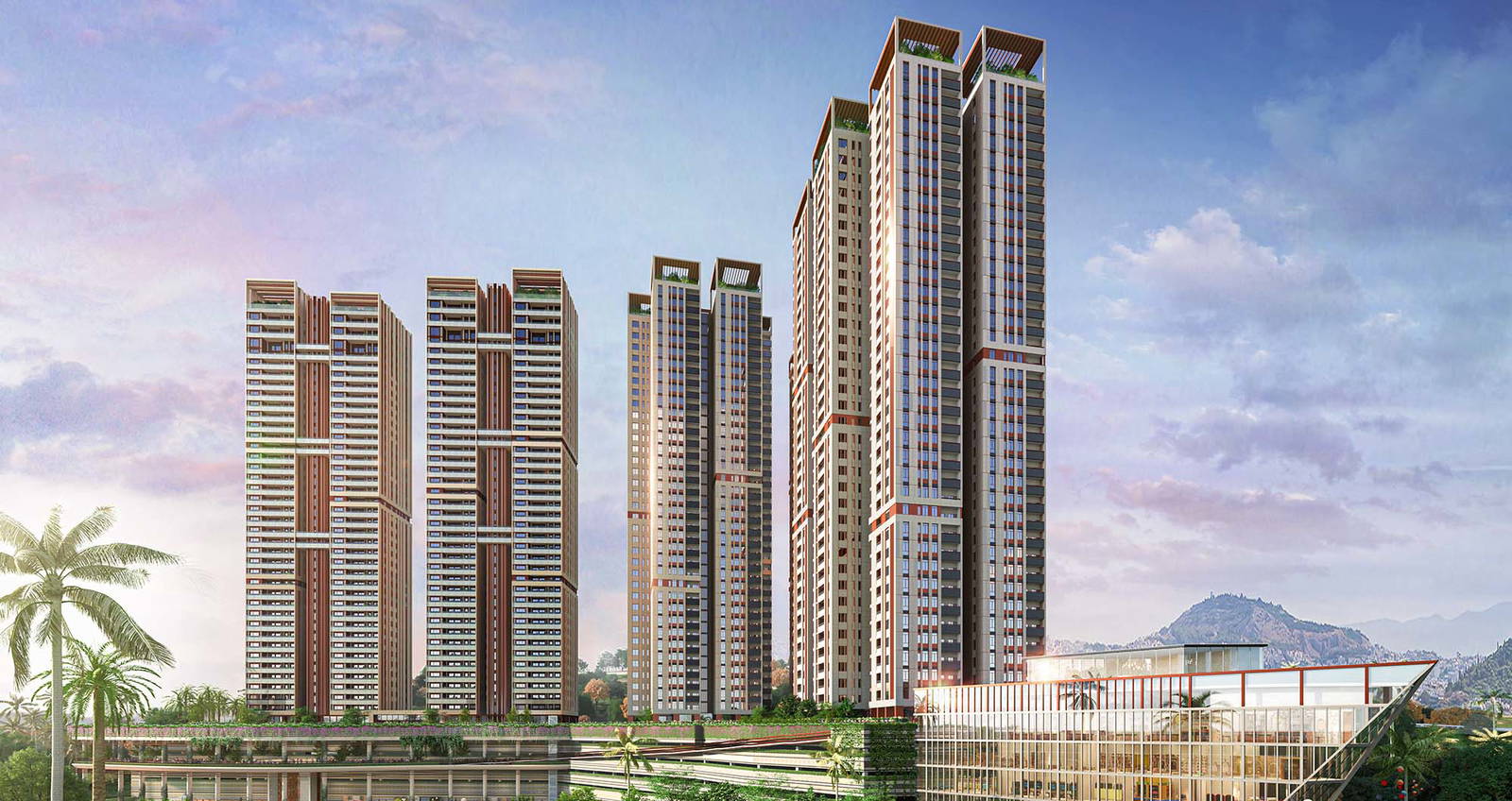
Explore Srias IWA, the premier apartments for sale in Hyderabad. Discover ultra-luxury 3, 3.5,...
-

Discover the latest properties in Nanakramguda, Hyderabad. Our 2025 guide covers real estate...
-
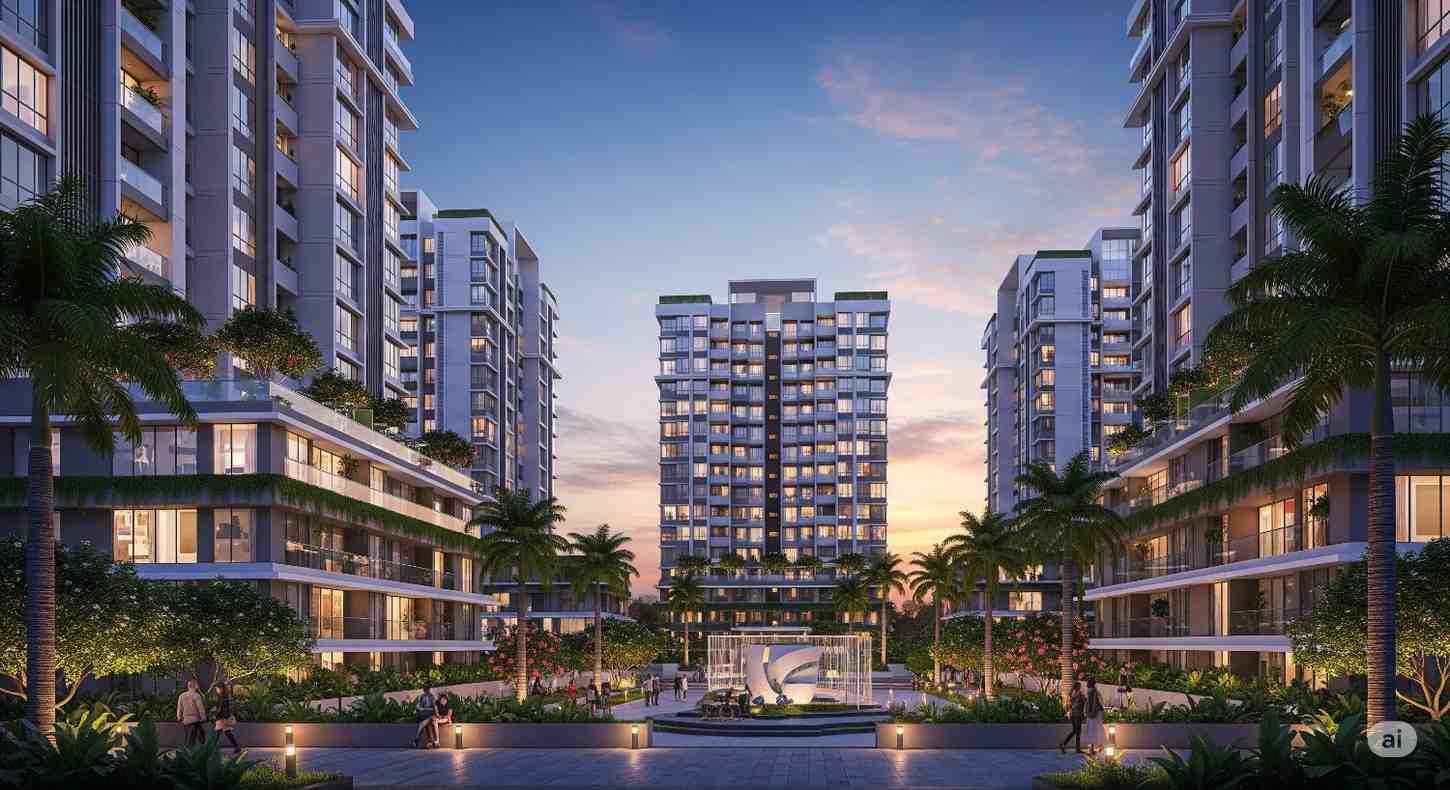
Explore Kokapet, Hyderabad's premier residential hub. Get expert guides on lifestyle,...
-

Explore Sumadhura Palais Royale, the premier apartments for sale in Hyderabad. Discover...
-

Discover the latest properties in Puppalaguda, Hyderabad. Our 2025 guide covers real estate...
-

Explore the most luxurious SAS Crown apartments in Kokapet, Hyderabad. Discover the pinnacle of...
-

Check out the best properties in Chennai for buying, renting, and investment. Discover top...
-

Explore top properties in Mumbai for buying, renting, or investment. Gain insights into pricing,...
-

Find the best areas to buy, rent, or invest in Bangalore. Get expert insights on affordability,...
-

Discover the best properties in Hyderabad for buying, renting, and investment. Discover top...
-

Explore top properties in Delhi for buying, renting, or investment. Gain insights into pricing,...
-

Looking for a home in Kolkata? Discover the best areas to buy, rent, or invest. Get expert...
