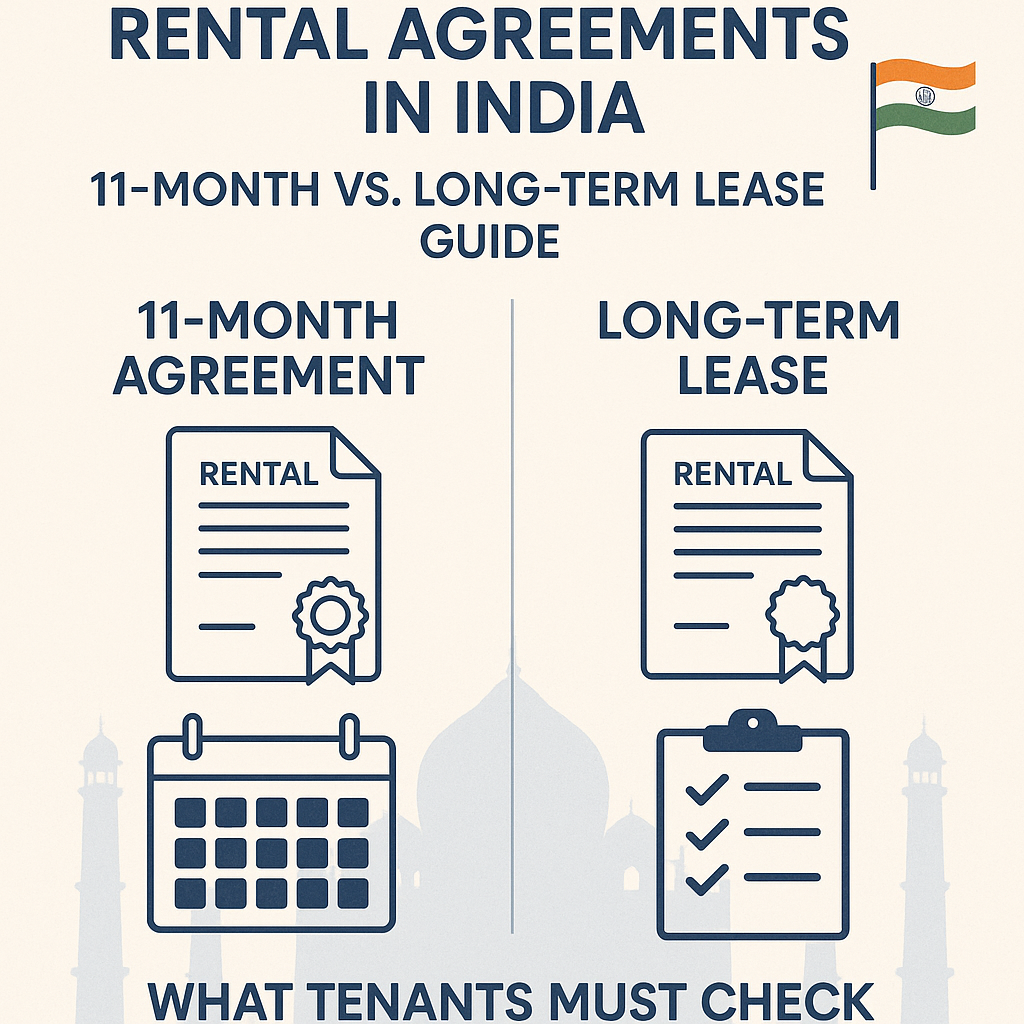
The Ultimate Guide to Rental Agreements: Why 11 Months?
In India, whether you are a landlord or a tenant, you have likely noticed a peculiar pattern: almost every standard rental agreement is drafted for exactly 11 months. Not one year, not two years, but 11 months.
Is this a magic number? Is it a superstition? No, it is a calculated legal strategy.
Navigating the rental market can be tricky. From security deposits to "lock-in periods," the fine print can cost you money if you aren't careful. This evergreen guide demystifies the Indian rental agreement and explains what you are actually signing.
1. The "11-Month" Mystery Solved
The reason is simple: Stamp Duty and Registration Laws.
- The Law: According to the Registration Act, 1908, any lease agreement for a period of 12 months or more must be mandatorily registered with the Sub-Registrar’s office. This involves paying strict Stamp Duty (which can be 1-2% of the annual rent + deposit) and Registration Fees.
- The Loophole: An agreement for 11 months does not require mandatory registration. It can simply be printed on a Stamp Paper (usually ₹100 or ₹500) and notarized.
The Benefit: It saves both the landlord and the tenant the hassle of visiting the government office and paying hefty stamp duty charges. This is why 11-month agreements are the standard for residential renting.
2. "Leave and License" vs. "Lease Deed"
Most people use the word "Lease," but in India, you are likely signing a "Leave and License" agreement. Knowing the difference is crucial for your rights.
Leave and License (The Standard)
- Definition: The landlord grants you "permission" (license) to enter and use the property.
- Ownership: No interest in the property is created. Possession remains legally with the landlord.
- Eviction: Easier for the landlord to evict a tenant once the license expires.
- Best For: Residential renting (11 months).
Lease Deed
- Definition: A transfer of the "right to enjoy" the property for a specific time.
- Ownership: Creates a legal interest in the property for the tenant.
- Eviction: Very difficult. Tenants have strong protection under Rent Control Acts and cannot be evicted easily.
- Best For: Long-term commercial rentals (5-10 years) where businesses need stability.
3. The "Lock-In Period": Don't Get Trapped
This is the most dangerous clause for a tenant.
- What it is: A specific period (e.g., the first 6 months) during which you cannot vacate the property.
- The Risk: If you leave during the lock-in period (say, you lose your job or get transferred), you are legally liable to pay the rent for the entire remaining lock-in period.
- The Fix: Always negotiate for a zero lock-in or a very short one (1-2 months). Ensure the "Notice Period" (usually 1 month) is separate from the lock-in.
4. Police Verification: It’s Mandatory
In most major Indian cities (Delhi, Mumbai, Bangalore, Pune), Police Verification of tenants is not just a safety measure; it is a legal requirement.
- For Landlords: Failing to do this is a punishable offense under Section 188 of the IPC.
- For Tenants: It creates a safety record. It is usually a simple online process where you upload your ID proof and employment details to the city police portal.
5. Security Deposit & Maintenance
- Security Deposit: In cities like Bangalore, landlords often ask for 6-10 months of rent as a deposit. In Delhi/NCR, it is typically 1-2 months.
- Tip: Always ensure the agreement states that the deposit is interest-free and fully refundable (minus damages) at the time of vacating.
- Maintenance Charges: Be clear on who pays the monthly society maintenance. Usually, the tenant pays the recurring monthly charges, while the landlord pays for any one-time "sinking fund" or major building repair costs.
Conclusion: Read Before You Sign
A rental agreement is not just a formality; it is the only thing protecting your peace of mind. Whether you are renting your first apartment or leasing out your second home, understanding the 11-month rule and the difference between a License and a Lease is essential.
Don't rely on verbal promises. Get everything—from the AC repair policy to the painting charges—written down.
Looking for a home with transparent rental terms? Browse our Verified Rental Listings. Landlords, list your property for free and get verified tenants at https://gharpe.com.

Debojyoti Roy
Creative Content Writer
Debojyoti Roy is a seasoned content‑marketing specialist with 6 + years of digital‑marketing experience. Today, he applies that expertise to a field he loves just as much as careers: helping people find the perfect place to live.
At GharPe.com, India’s first 3‑D/VR real‑estate portal, Roy shapes the entire content strategy and sets the platform’s friendly, trustworthy voice. He creates the foundational guides, checklists and explainer pieces that fuel GharPe’s blog, social‑media feeds and in‑app tips, ensuring every post reflects the site’s signature “see‑before‑you‑buy” approach to property search.
Audience focus
Roy zeroes in on first‑time buyers, young families and anyone curious about the Indian housing market. His plain‑language articles demystify topics like: * understanding 3‑D walkthroughs and drone views * comparing new‑build vs. resale properties * decoding RERA approvals and loan eligibility * negotiating price and spotting hidden costs
Voice of empathy & clarity
Having guided job‑seekers through stressful transitions earlier in his career, Roy writes with the same empathy for house‑hunters. He anticipates their worries (down‑payment deadlines, paperwork jargon, FOMO on better deals, etc.) and answers them in clear, actionable steps that make the buying journey feel manageable.
To make sure this advice reaches everyone who needs it, Roy leans on deep SEO knowledge: keyword mapping for location‑based searches, schema for property listings, and strategic internal‑linking that boosts GharPe’s authority on Google.
Every guide, alert and tip he publishes serves one goal: connecting good people with great homes - fast, confidently and with a little excitement along the way.
Credentials
- Certified Content Marketing Specialist
- Google Analytics Certified
- HubSpot Content Marketing Certified
- SEMrush Content Marketing Toolkit Certified
