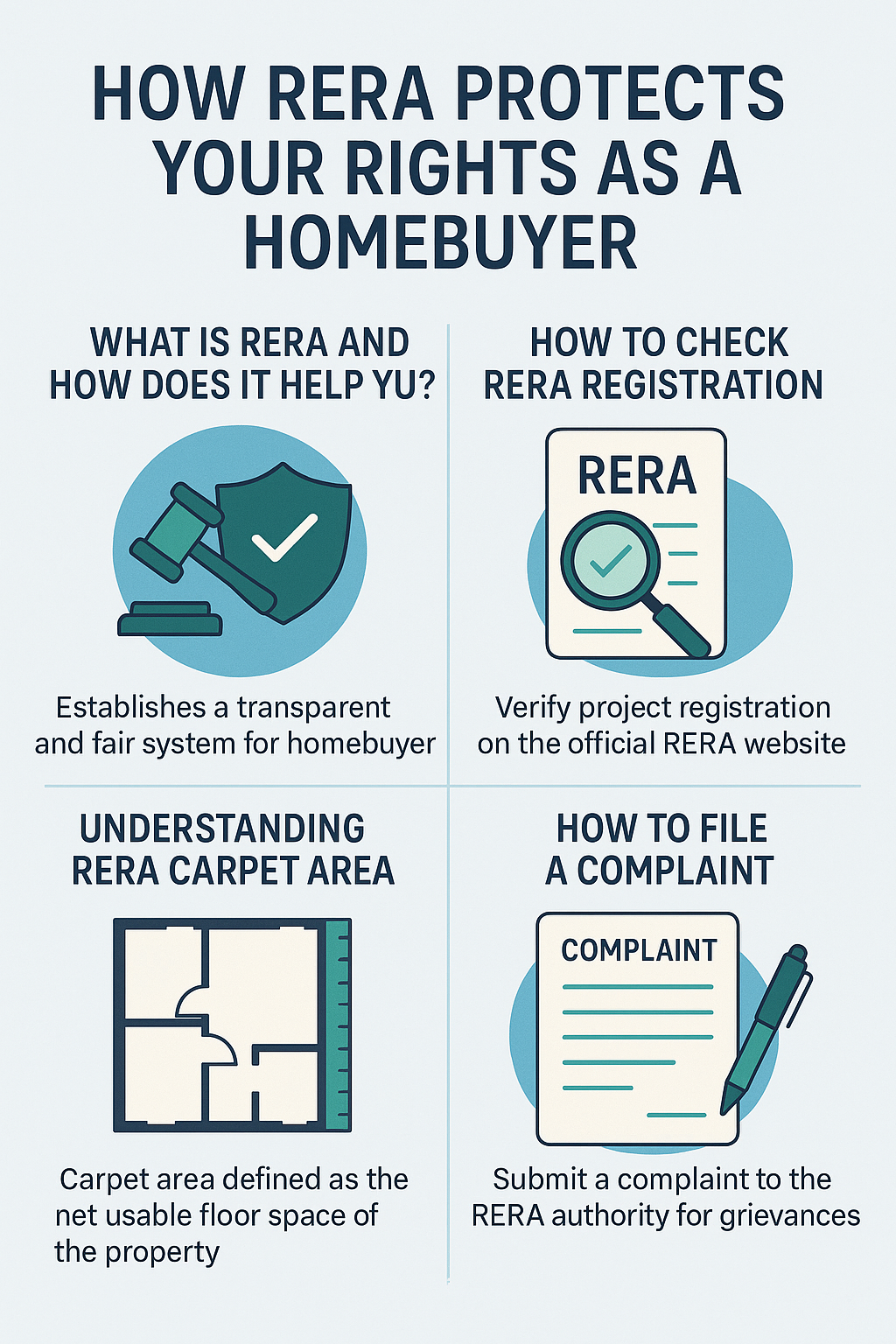
Understanding RERA 2026: How RERA Protects Your Rights as a Homebuyer
For decades, the Indian real estate market was often described as the "Wild West." It was a seller's market where delays were the norm, "Super Built-Up Area" was a confusing metric used to inflate prices, and homebuyers had little recourse if a builder vanished with their money.
But with the maturity of the Real Estate (Regulation and Development) Act (RERA), the power dynamic has fundamentally shifted. By 2026, RERA is no longer just a "new rule"—it is the established bedrock of Indian real estate. It has transformed homebuyers from helpless consumers into empowered investors with legally protected rights.
However, a law is only as powerful as your knowledge of it. Many buyers still don't know how to use RERA to check a project's legitimacy or claim compensation for delays. This guide cuts through the legal jargon to explain exactly how RERA protects you and how to use it.
1. The Core Protection: The "Escrow Account" Rule
The single biggest fear for any homebuyer is: "Will the builder take my money and use it elsewhere?" Before RERA, this was common practice. Builders would take money from Project A to fund land for Project B, causing massive delays.
How RERA Protects You: RERA mandates that 70% of the money collected from buyers must be deposited into a separate, dedicated Escrow Account. This money can only be withdrawn to cover the construction and land cost of that specific project. It cannot be diverted. This ensures that your money is actually building your home.
2. The End of "Super Built-Up" Confusion: RERA Carpet Area
Builders used to sell apartments based on "Super Built-Up Area," a vague figure that included the lobby, the lift shaft, the pool, and the clubhouse. You often paid for 1,500 sq. ft. but lived in only 1,000 sq. ft.
How RERA Protects You: RERA made it illegal to sell property on Super Built-Up Area. Builders must now quote prices based strictly on RERA Carpet Area.
What is RERA Carpet Area? It is the net usable floor area of an apartment. * Includes: The area within the walls (bedrooms, kitchen, living room, toilets) and the thickness of the internal partition walls. * Excludes: External walls, service shafts, balconies, and open terraces.
This means you pay only for the space you can actually use.
3. Total Transparency: How to "RERA Check" a Project
RERA has forced builders to be transparent. Every registered project has a unique RERA Registration Number, and all its details are public.
Step-by-Step Guide to Checking a Project: 1. Find the RERA Number: It must be printed on every brochure and advertisement. 2. Visit Your State's RERA Website: (e.g., MahaRERA, UP-RERA, Karnataka RERA). 3. Search the Project: Enter the registration number in the search bar. 4. Download the Documents: You can now see: * The approved floor plans (to ensure they match what the sales guy showed you). * The legal title report of the land. * The promised possession date (the legal deadline, not the marketing promise). * The number of apartments booked vs. available.
4. Protection Against Delays: Your Right to Interest
Delayed possession was the plague of Indian real estate. RERA introduced strict financial penalties to cure it.
How RERA Protects You: If a builder fails to hand over possession by the date mentioned in the agreement, they are liable to pay you interest on the amount you have paid. * The Rate: typically the SBI MCLR + 2%. * The Choice: You have two options: 1. Withdraw: Cancel the booking and get a full refund with interest. 2. Stay: Continue with the project and get paid interest for every month of delay until you get the keys.
5. The 5-Year Defect Liability Period
The builder's responsibility doesn't end the moment you get the keys.
How RERA Protects You: RERA mandates a 5-year defect liability period. If you find any structural defect or poor workmanship (like plumbing leaks or cracks) within 5 years of possession, the builder must rectify it free of cost within 30 days. If they fail to do so, you can claim compensation.
6. How to File a Complaint
If a builder violates any of these rights, you don't need to go to a slow civil court. You can file a complaint directly with your state's RERA Authority.
- The Process: It is entirely online on most state portals.
- The Fee: Usually between ₹1,000 to ₹5,000.
- The Timeline: RERA tribunals are designed for fast-track dispute resolution, typically aiming to resolve cases within 60 days.
Conclusion: Your Shield in the Market
RERA is your safety shield. It has cleaned up the market, removing "fly-by-night" operators and leaving mostly credible, professional developers. But remember, RERA only protects you if you buy a RERA-Registered Project.
Never invest in a property that does not have a valid RERA number. It is the first and most important check you should make.
To browse verified, RERA-registered projects with complete transparency, visit our verified listings. For more legal tips on buying property, check out our Legal Guides at https://gharpe.com.
