Green Buildings: Are Eco-Friendly Homes Worth the Extra Cost in India?
You've seen the terms everywhere: "green building," "eco-friendly," and "sustainable living." Modern real estate projects proudly advertise their IGBC (Indian Green Building Council) or GRIHA ratings, promising a healthier lifestyle and a lighter carbon footprint. But these homes often come with a noticeably higher price tag.
This leads to the critical question for every aspiring homebuyer: Is a "green home" a smart financial investment, or is it a luxury "feel-good" feature you're overpaying for?
The answer isn't just about the environment; it's about pure, long-term economics. This guide will break down what a green building really is, weigh the tangible pros against the upfront cons, and help you decide if it's worth the extra cost.
What Exactly Makes a Building "Green"?
First, a "green building" is much more than just a few solar panels on the roof or some plants on the balcony. It's a holistic design philosophy.
A certified green building is designed, constructed, and operated to minimize its total environmental impact. This includes:
- Energy Efficiency: Using high-performance, double-glazed windows that block heat, LED lighting, and natural ventilation to reduce the need for air conditioning.
- Water Conservation: Installing low-flow toilets and faucets, and implementing large-scale rainwater harvesting and water recycling (STP) plants.
- Sustainable Materials: Using eco-friendly materials like fly ash bricks, recycled steel, bamboo flooring, and non-toxic (low-VOC) paints that improve indoor air quality.
- Passive Design: Orienting the building to maximize natural light (reducing electricity use) and cross-ventilation (reducing AC use).
- Waste Management: Providing on-site waste segregation and composting systems.
The "Pro" Argument: Why Green Homes Are a Smart Investment
The benefits of a green home are tangible and can be measured in both health and wealth.
-
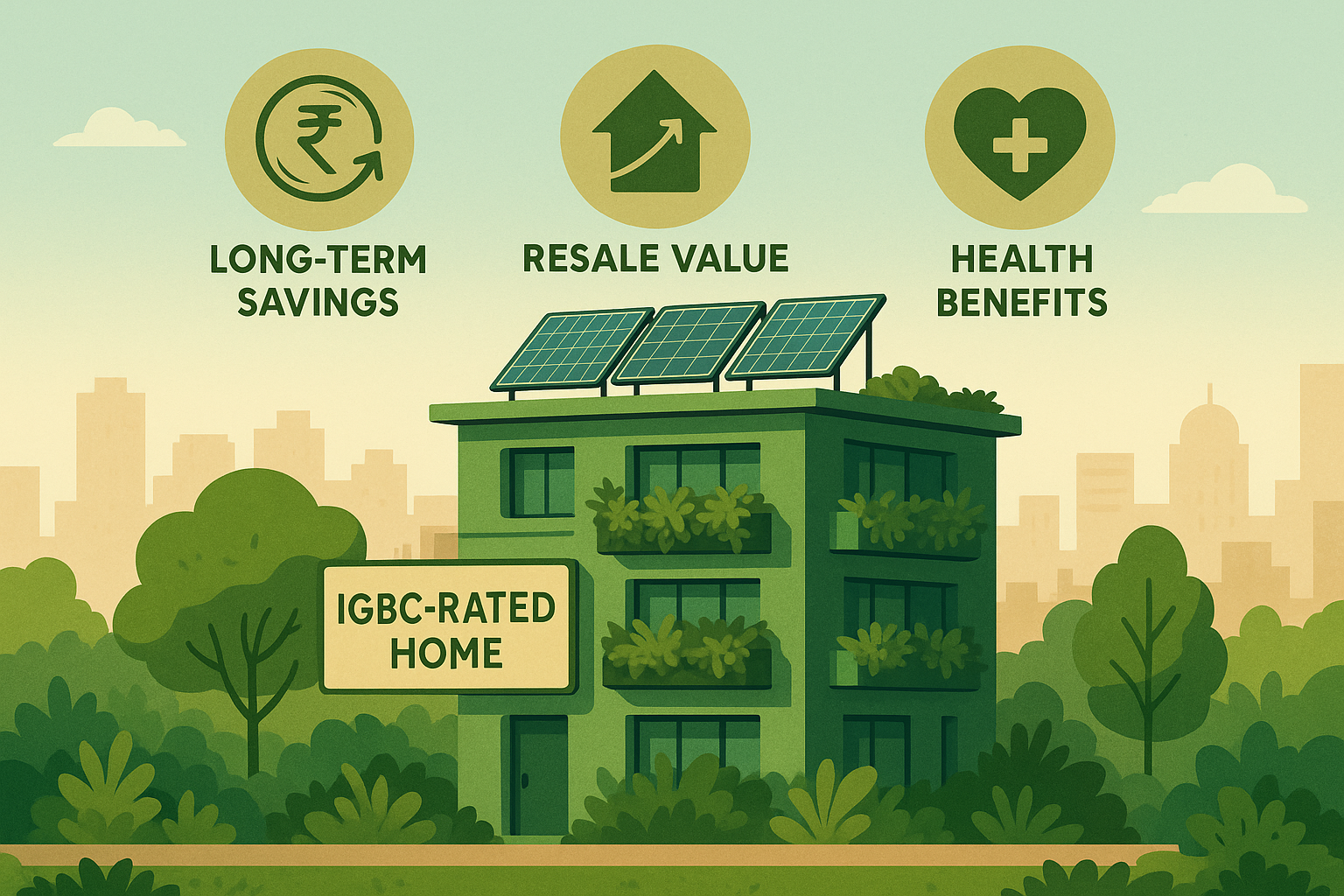
Pro 1: Significant, Lifelong Utility Savings This is the biggest financial win. A certified green home isn't just a building; it's a high-performance machine. According to IGBC, a green building can save 20-30% on energy and 30-50% on water consumption. This translates to thousands of rupees slashed from your electricity and water bills every single month, for as long as you live there.
-
Pro 2: Better Health & Wellness This is the priceless benefit. Green homes are built to be healthier. By using low-VOC (Volatile Organic Compound) paints, adhesives, and furnishings, you are breathing cleaner, non-toxic air. The emphasis on natural light and ventilation has been proven to improve mood, productivity, and overall well-being. You're not just buying a home; you're investing in your family's health.
-
Pro 3: Higher Resale Value As energy and water costs rise, and as more buyers become health- and eco-conscious, "green" is becoming a powerful status symbol. A property with an official IGBC or GRIHA certification will stand out in a crowded market. It will attract more discerning buyers, sell faster, and command a significant price premium over a conventional, inefficient building.
The "Con" Argument: The Upfront Cost & Challenges
If green homes are so great, why isn't every building one? The barrier is almost always the initial cost.
-
Con 1: The Higher Initial Price Tag There's no sugarcoating it: green buildings cost more to build. The high-performance glass, specialized water treatment plants, solar infrastructure, and the cost of certification add to the project's bottom line. Developers pass this on to the buyer, and a green-certified home can be 5% to 15% more expensive than a comparable non-green property.
-
Con 2: "Greenwashing" This is the biggest risk for buyers. Many projects use "eco-friendly" as a marketing buzzword without any real certification. They might have a small garden and call it "green." This is "greenwashing"—you pay the premium without getting any of the real, measurable benefits.
-
Con 3: Maintenance Awareness Some advanced green systems (like a rooftop solar grid or a complex water recycling plant) may require specialized maintenance, though this is becoming more mainstream.
How to Spot a Genuinely Green Home
How do you avoid being "greenwashed"? You must look past the brochure and ask for proof.
- Demand the Certification: Don't just take the builder's word for it. Ask for the official IGBC or GRIHA certificate for the project. These are third-party ratings (like a 3-star or 5-star rating for an AC) that are not easy to get.
- Ask Specific Questions:
- "What is the U-value or SHGC (Solar Heat Gain Coefficient) of the windows?"
- "What are the flow rates of the faucets?"
- "Is there a building-wide rainwater harvesting system?"
- "What materials are used for insulation?" A builder who has really invested in green tech will be proud to give you the exact specifications.
Conclusion: The Verdict? It's an Investment, Not an Expense
Yes, a certified green home is worth the extra cost, provided you see it correctly.
The higher sticker price is not an "expense"; it is an investment. The money you save on your electricity and water bills every month acts as an "EMI" that pays back your initial investment. The break-even period is often just 5-7 years.
After that, you are in pure profit, living in a healthier, more comfortable home that costs less to run and will be worth more when you sell it. It's a choice that is not only environmentally responsible but also financially brilliant.
To find verified green-certified properties, use the "eco-friendly" filter on our property listings. You can also learn more about sustainable living in our home guides at https://gharpe.com.

Debojyoti Roy
Creative Content Writer
Debojyoti Roy is a seasoned content‑marketing specialist with 6 + years of digital‑marketing experience. Today, he applies that expertise to a field he loves just as much as careers: helping people find the perfect place to live.
At GharPe.com, India’s first 3‑D/VR real‑estate portal, Roy shapes the entire content strategy and sets the platform’s friendly, trustworthy voice. He creates the foundational guides, checklists and explainer pieces that fuel GharPe’s blog, social‑media feeds and in‑app tips, ensuring every post reflects the site’s signature “see‑before‑you‑buy” approach to property search.
Audience focus
Roy zeroes in on first‑time buyers, young families and anyone curious about the Indian housing market. His plain‑language articles demystify topics like: * understanding 3‑D walkthroughs and drone views * comparing new‑build vs. resale properties * decoding RERA approvals and loan eligibility * negotiating price and spotting hidden costs
Voice of empathy & clarity
Having guided job‑seekers through stressful transitions earlier in his career, Roy writes with the same empathy for house‑hunters. He anticipates their worries (down‑payment deadlines, paperwork jargon, FOMO on better deals, etc.) and answers them in clear, actionable steps that make the buying journey feel manageable.
To make sure this advice reaches everyone who needs it, Roy leans on deep SEO knowledge: keyword mapping for location‑based searches, schema for property listings, and strategic internal‑linking that boosts GharPe’s authority on Google.
Every guide, alert and tip he publishes serves one goal: connecting good people with great homes - fast, confidently and with a little excitement along the way.
Credentials
- Certified Content Marketing Specialist
- Google Analytics Certified
- HubSpot Content Marketing Certified
- SEMrush Content Marketing Toolkit Certified
